Riding and walking the bridle trails of Rancho Santa Fe
The bridle trails of Rancho Santa Fe thread the Covenant on dedicated easements. How the network works, and how to enjoy it.
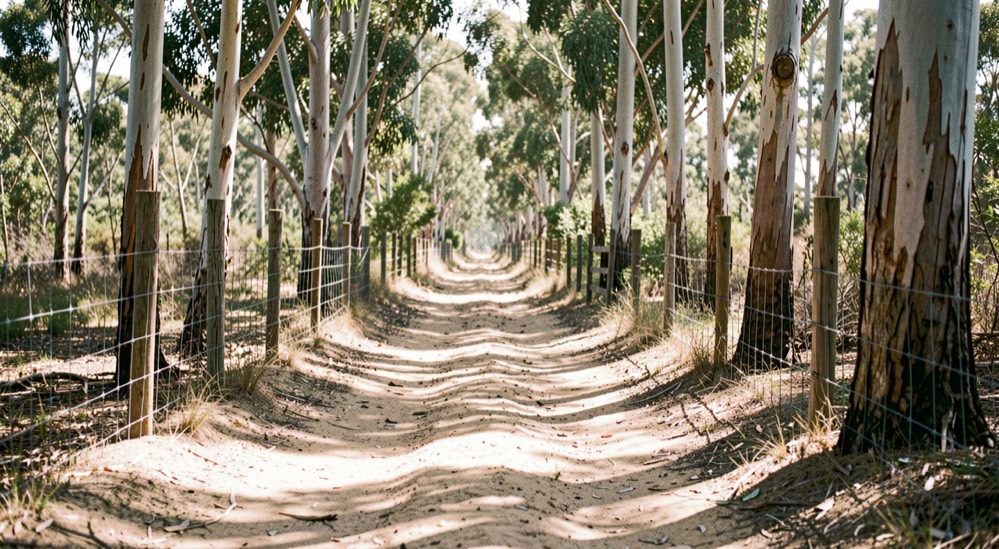
Ask riders what makes Rancho Santa Fe unlike any other affluent corner of coastal California, and the answer is not architecture or gates. It is sand underfoot: a network of dedicated bridle trails threading for miles between estates, along roadside easements and through groves, so that a horse can cross much of the community without ever touching asphalt. Walkers and runners share the system, and even residents who never saddle an animal count the trails among the reasons the place feels like country rather than suburb.
How the network works
The trails exist because the founding plan wanted them. Within the Covenant, riding and walking routes were reserved as easements when the subdivision was laid out in the 1920s, and the community association administers them today: maintaining surfaces, publishing maps, arbitrating between the people who use the trails and the owners whose land the trails cross. Residents measure the system in tens of miles, an astonishing figure for private land inside a major metropolitan county, and new sections occasionally appear as development agreements require them. The precise mileage shifts as easements are adjusted, which is why the association’s current map, not any website’s recollection, is the authority worth carrying.
Legally and practically, a trail is a promise. It crosses private ground that owners have agreed, in perpetuity, to keep passable; the courtesy flows both ways, since owners accept riders past their oaks and riders accept, for example, that a dog off lead near horses is not a small matter. The system’s survival for a century is a running proof that covenants can encode generosity, not just restriction, a theme we develop in the Covenant essay.
The trails are the covenant’s kindest clause: miles of private land, opened by agreement to anyone who passes slowly.
Using them well
Etiquette on a shared trail is simple and mostly unwritten. Horses have priority; walkers step aside and greet the rider, since a spoken voice tells a horse you are human. Cyclists dismount or pass wide and slow. Dogs stay on lead where horses are possible, and their people carry out what their dogs carry in. Hours are dawn to dusk, and the golden hours are worth the alarm: fog in the eucalyptus rows at first light, the smell of warm sage after the marine layer burns off. What you will not find are crowds, food trucks or signage corporations; the system’s austere charm is the point, and it pairs naturally with the quiet calendar we describe across the country life pages.
Seasons matter. After the winter rains the sand firms up and the verges go green and loud with birds; by late summer the same route runs through gold grass and dry air, and fire season imposes its own etiquette: no sparks, no smoking, and a working sense of where the exits are. Fire mindfulness is not optional anywhere in North County; our garden essay covers the defensible space discipline that surrounds country living here.
A landscape built for the saddle
Trails shape a community more than roads do, because they decide who meets whom. In Rancho Santa Fe the system ties the village, the school and the residential tracts into a web a child can theoretically navigate on pony back, a fact that still astonishes transplants from places where a ride means a trailer and a highway. The network also keeps horses economically sensible here: boarding stables and trainers operate within reach, and properties with paddocks hold their premium for reasons the trail map explains better than any brochure. Our neighborhood guide notes which communities tie into the web most directly, and the journal keeps accounts of mornings spent on it, starting with a walk through the village.
Field notes
- The trails ride on recorded easements within the Covenant and are administered by the community association, which publishes the current map.
- Horses have priority; the unwritten contract is courtesy in both directions between users and landowners.
- Dawn and the hour after the marine layer lifts are the finest windows; fire season adds its own rules.
For the gardens the trails pass, see dry summer gardens in North County; for the houses behind the hedges, California ranch architecture.