The California home inspection, decoded
What a California home inspection covers, what it skips, and which specialty reports a country property in RSF may also need.
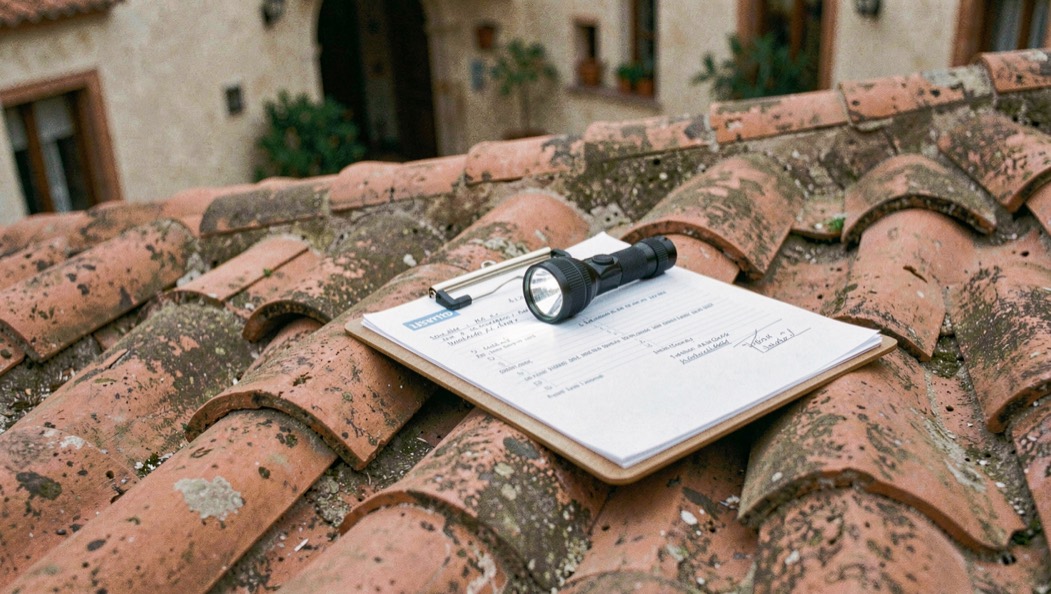
Somewhere in every California purchase, a buyer receives a report the size of a phone book, learns that a window will not open in the guest room, and wonders what the document actually accomplished. The home inspection is a genuinely useful instrument, badly understood. Understanding its scope, and the specialty inspections that surround it, matters double in Rancho Santa Fe, where wells, septic systems, long private drives and clay tile roofs make a country property’s risks older and more interesting than a suburb’s.
What the general inspection is
A standard home inspection in California follows the practices of the national and state professional associations: a visual, non invasive survey of the accessible systems and components of the house, performed in a few hours, reported with photographs and plain language. The inspector walks the roof if it is safe, crawls the underfloor if there is one, opens the electrical panel, runs the plumbing, tests representative windows and doors, and evaluates the heating and cooling equipment by operation rather than by disassembly. The good ones are generalists in the best sense: they know what normal looks like across thousands of houses, which is exactly the knowledge that reveals what is not normal about yours.
Equally important is what the report is not. It is not a code compliance audit, not a warranty, not an appraisal, and not a repair guarantee. California’s standard contract practice treats the inspection as an investigative stage during which the buyer may investigate and, within the contingency periods, act on findings. The inspection is read, correctly, as a discovery tool for negotiating repairs or credits, and as the beginning of the buyer’s education in the house’s systems, an education that continues in ownership: our pages on buying and owning in California collect the rest of the curriculum.
The general inspection is a wide shallow look; the defects that matter here usually live deeper, in the sewer line or the well.
What it does not cover, and what to order instead
The general inspection excludes, by standard, everything that requires a specialist’s instruments or license. The list a North County buyer should think through: sewer lateral scoping, since a cracked line under a drive is among the most expensive surprises a large property can hide; full roof certification, which roofers issue separately; chimney interior inspection; pool and spa equipment and leak detection; heating and cooling refrigerant and efficiency testing; and, in hillside country, geological and drainage review, because water moving wrong is how slopes and foundations fail. On the disclosure side, California transactions bring a natural hazard disclosure report covering flood, fire and seismic zones, and proximity matters of public record; read it as a map of the property’s official context rather than as commentary on its condition.
Rural properties add a second tier. A private well wants flow and quality testing and a look at the pump and pressure system; a septic system wants a current inspection and a pumping history; propane tanks, generators, and long driveways with culverts each carry their own maintenance arc. None of these are exotic: they are simply the systems a municipal address replaces with a utility bill. A buyer’s inspection period in the country is really a sequence of small specialized investigations, scheduled in parallel, read together at the end.
Reading the report like an owner
Reports overwhelm because they are exhaustive by design; every house produces a long list of observations, most of them minor. The skill is triage. Health and safety items first: electrical panels of unhappy vintage, water heater venting, missing smoke detectors. Water movement second, since California’s dry climate hides moisture damage rather than preventing it: grading, gutters, that suspicious stain under the guest bath. Big ticket systems third, priced with the specialists’ findings. Everything else, the stuck windows and the cosmetic cracks, is a maintenance list, and a useful one: transfer it to your first year of ownership. Inspecting well is how a buyer arrives at the closing already knowing the house, which is the entire point of the exercise.
Field notes
- The general inspection is visual and broad; it is a discovery tool, not a warranty or code audit.
- Order the specialists in parallel: sewer scope, roof certification, chimney, pool, HVAC, geology where slopes are involved.
- Country properties add wells, septic, propane and drainage to the checklist, plus the natural hazard disclosure report.
For the tax arithmetic that follows the purchase, read Proposition 13 explained; for the houses these inspections crawl under, California ranch architecture and the neighborhood guide.