Proposition 13 and the arithmetic of owning in California
Proposition 13 caps California property taxes at one percent of assessed value. What that means when you buy a home here.
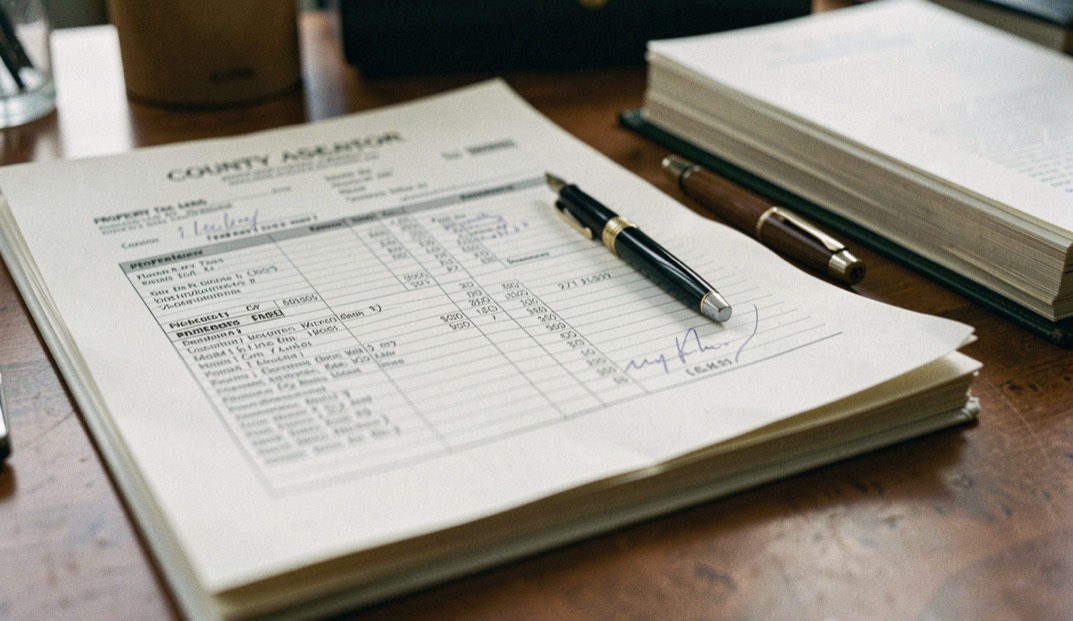
No piece of paperwork surprises newcomers to California quite like the property tax bill. A buyer from Texas or New Jersey, braced for anything, opens the annual statement and finds a number lower than expected, sometimes dramatically so; a neighbor who has owned for thirty years opens the same kind of statement and finds a number that would embarrass a modest condo elsewhere. Both facts trace to one 1978 ballot measure, Proposition 13, which remains the arithmetic under every ownership decision in the state, Rancho Santa Fe included.
What the measure actually does
Proposition 13 did three things, and the second is the famous one. First, it set the base property tax rate at one percent of assessed value, plus the additional amounts that local voters have approved for schools, districts and bonds, so the realistic multiplier on any California bill sits somewhat above one percent and varies by jurisdiction. Second, it capped the growth of a property’s assessed value at two percent per year for as long as ownership continues, regardless of what the market does. Third, it required reassessment to full market value, in practice to the purchase price, when a property changes ownership or undergoes new construction.
Stack those three rules and you get the state’s signature effect: assessment divergence. Two identical houses side by side, one held for decades, one sold last spring, carry taxable values that may differ several fold, because the long owner’s assessment compounded at two percent a year through markets that rose far faster. The system taxes the purchase rather than the property, which is strange, durable, and entirely predictable once you know the rules. It also means public assessed values are a poor guide to market values, a confusion our market pages warn about alongside the misuse of price per square foot.
Two neighbors, identical houses, tax bills a generation apart: the California system taxes the purchase, not the property.
What a buyer should expect
When you buy, your purchase price generally becomes your new base year value, and the annual bill follows the local rate on that base, plus any parcel taxes and, in some communities, Mello Roos assessments: voter approved charges that fund infrastructure and services in newer districts and appear alongside, not inside, the one percent. Whether a given Rancho Santa Fe area property carries such assessments is a question of the specific district maps, and diligent buyers read the tax rate areas in the disclosure packet rather than assuming. Suppression is real as well: certain transfers between parents and children, and grandparents and grandchildren under conditions, are excluded from reassessment under the state’s constitutional rules, and a buyer thinking about family successions should take advice on those provisions rather than folklore.
Two practical corollaries follow. First, budget from the local rate times your price, never from the seller’s current bill, which reflects the seller’s history and not yours. Second, improvements trigger reassessment of the improved portion: the new square footage is assessed at completion, while the original base continues. Owners planning a major remodel inside a review community like the Covenant should therefore expect the design review process described in our California ownership guide to have a tax echo, and a construction sequence worth scheduling with that in mind.
The trade everyone argues about
Proposition 13 is also a public argument: it restrains volatility for owners, weights the system toward longevity, and, critics say, discourages turnover and distorts comparisons between similar properties. Nothing here requires settling the argument; owning in California only requires understanding which promises the system keeps. It keeps these: your assessed value will not rise faster than two percent while you hold, your bill will follow voter approved additions, and your buyer will restart the clock at their price. In a market where the average holding period runs long, that predictability is itself a feature of ownership, quietly priced into every hillside estate.
Field notes
- One percent base rate plus voter approved additions; reassessment to purchase price at sale; two percent annual cap thereafter.
- Budget from your price and the local rate, never from the seller’s current bill.
- Check for Mello Roos and parcel taxes by district, and note that major construction reassesses the improvement.
Continue with the California home inspection, then place the whole purchase in context with months of inventory, our preferred thermometer for slow luxury markets.